"Life after thyroid cancer: the part no one prepares you for"
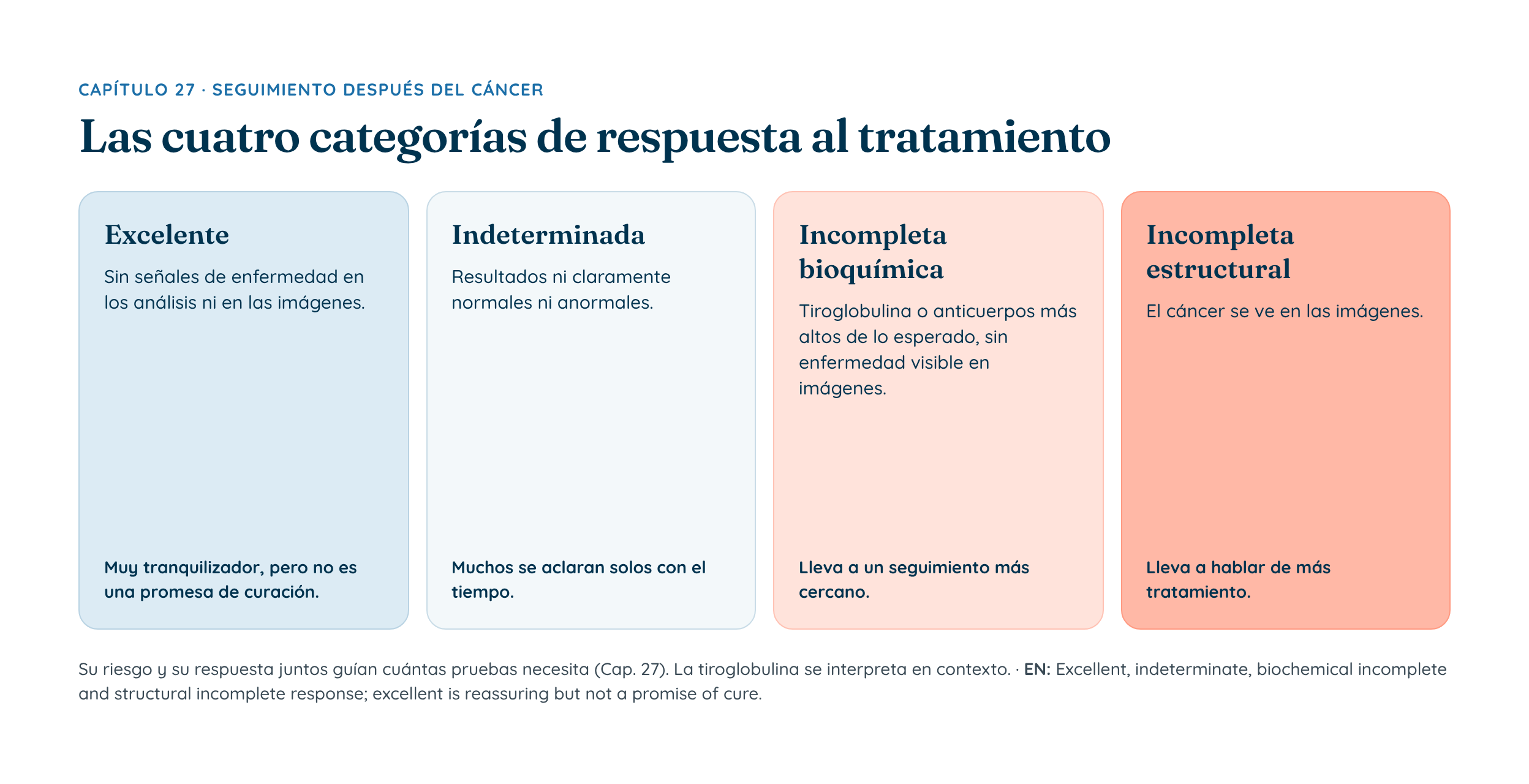
Case of a fictitious patient: Two years after her surgery and radioactive iodine, Gabriela, 34, had “excellent response” written on her chart. Her family considered the chapter closed. Yet every time a blood test came up, she barely slept the week before. “Everyone tells me it’s the ‘good cancer,’” she said. “So why do I still feel like this?”
“The good cancer” is still cancer
Most people treated for differentiated thyroid cancer do very well over the long term (Chapter 23). That is real, and it is good news. But studies of survivors show that life after treatment can still be hard: thyroid-related symptoms, worry about the cancer coming back, and the cost of ongoing care all weigh on people, and many studies find lower emotional well-being in survivors [2]. If you feel this way, you are not ungrateful and you are not alone.
Fear of recurrence
Worry that the cancer will return is one of the most common experiences after thyroid cancer. A systematic review found it reported in anywhere from 15% to 91% of survivors, depending on how it was measured [1]. It tends to be stronger in younger people and before a follow-up appointment [1], the feeling some patients call “scanxiety.” How strong the worry feels is not a measure of your actual risk. Your risk of recurrence is estimated from your own cancer, treatment and test results, and it can be very low even when the fear is loud.
What can help (general strategies; no thyroid-specific program has been tested yet [1]):
- Know your own risk. Ask your doctor where you stand on the response-to-treatment scale (Chapter 27). For many people, an “excellent response” means a low chance of recurrence, though not zero, and knowing that can quiet the worry. Ask too how often you need follow-up tests; for many people at low risk, follow-up becomes lighter over time (Chapter 27).
- Plan around appointments. Schedule results visits soon after tests, and bring someone with you.
- Talk about it. Tell your team if worry is affecting sleep, work or relationships; counseling and support groups help many survivors.
Energy, weight and mood
Fatigue, weight changes and low mood are common complaints after thyroid cancer. Sometimes they are related to thyroid hormone levels, and sometimes to other things: sleep, stress, other health conditions, or simply recovering from a major life event. Do not change your levothyroxine dose on your own; instead, bring your symptoms and your latest results to your team so you can look at the whole picture together (Chapter 21).
Pregnancy and family planning
Many young women diagnosed with thyroid cancer want to know whether they can safely have children. A meta-analysis of 22 studies found that after thyroid cancer treatment, rates of preterm birth and birth defects were similar to those in the general population, and radioactive iodine was not linked to a higher risk of miscarriage, preterm labor or birth defects [3]. One comparison did find more miscarriages among survivors than among women without thyroid cancer, so it is worth planning pregnancy with your team [3]. These are averages across studies, not a promise for any one pregnancy; your own plan depends on your treatment and current results, and current guidelines cover thyroid care before, during and after pregnancy [4].
After radioactive iodine, your team will usually advise waiting several months, often about 6, before trying to conceive (see Chapter 26), and your thyroid hormone dose will need adjusting during pregnancy under a written plan (Chapter 6).
Your voice and neck
Some survivors notice lasting changes in their voice, swallowing, or how their neck feels. These are often treatable; see Chapters 30–34.
Gabriela’s turning point
Gabriela asked her endocrinologist to explain her risk in plain words, and joined an online survivors’ group. She still feels a knot before each blood test, but now she schedules the results call for the next morning. “I stopped trying to be ‘over it,’” she said. “I just made room for it.”
Questions to ask
- What is my current risk of recurrence?
- How long will my follow-up last, and what tests will I need?
- Could my tiredness or weight changes be related to my thyroid levels?
- If I want to get pregnant, how long should I wait, and what changes?
Key points
- Feeling worried or worn down after “the good cancer” is common and real.
- Fear of recurrence is not the same as your actual risk; ask your team to explain your risk.
- Pregnancy after thyroid cancer treatment usually goes well, but plan it with your team.
- Support is available; tell your team how you are really doing.
A head and neck surgeon experienced in thyroid and voice care can help.
Sources
- Hampton J, et al. Fear of Cancer Recurrence in Differentiated Thyroid Cancer Survivors: A Systematic Review. Thyroid. 2024;34(5):541-558. doi:10.1089/thy.2023.0642 PubMed PMID 38368547
- Roth EM, et al. Patient-Reported Quality-of-Life Outcome Measures in the Thyroid Cancer Population. Thyroid. 2020;30(10):1414-1431. doi:10.1089/thy.2020.0038 PubMed PMID 32292128
- Moon S, et al. Risk of Adverse Pregnancy Outcomes in Young Women with Thyroid Cancer: A Systematic Review and Meta-Analysis. Cancers (Basel). 2022;14(10):2382. doi:10.3390/cancers14102382 PubMed PMID 35625995
- Korevaar TIM, et al. American Thyroid Association 2026 Guidelines for Thyroid Disease in Preconception, Pregnancy, and Postpartum. Thyroid. 2026;36(5):481-544. doi:10.1177/10507256261445624 PubMed PMID 42219800
This guide is for general education only. It does not diagnose conditions or replace a medical evaluation. Talk with your own doctor about your situation. In an emergency, call 911 now (in Puerto Rico or the United States; elsewhere, your local emergency number).