Looking at your vocal cords: before and after thyroid surgery
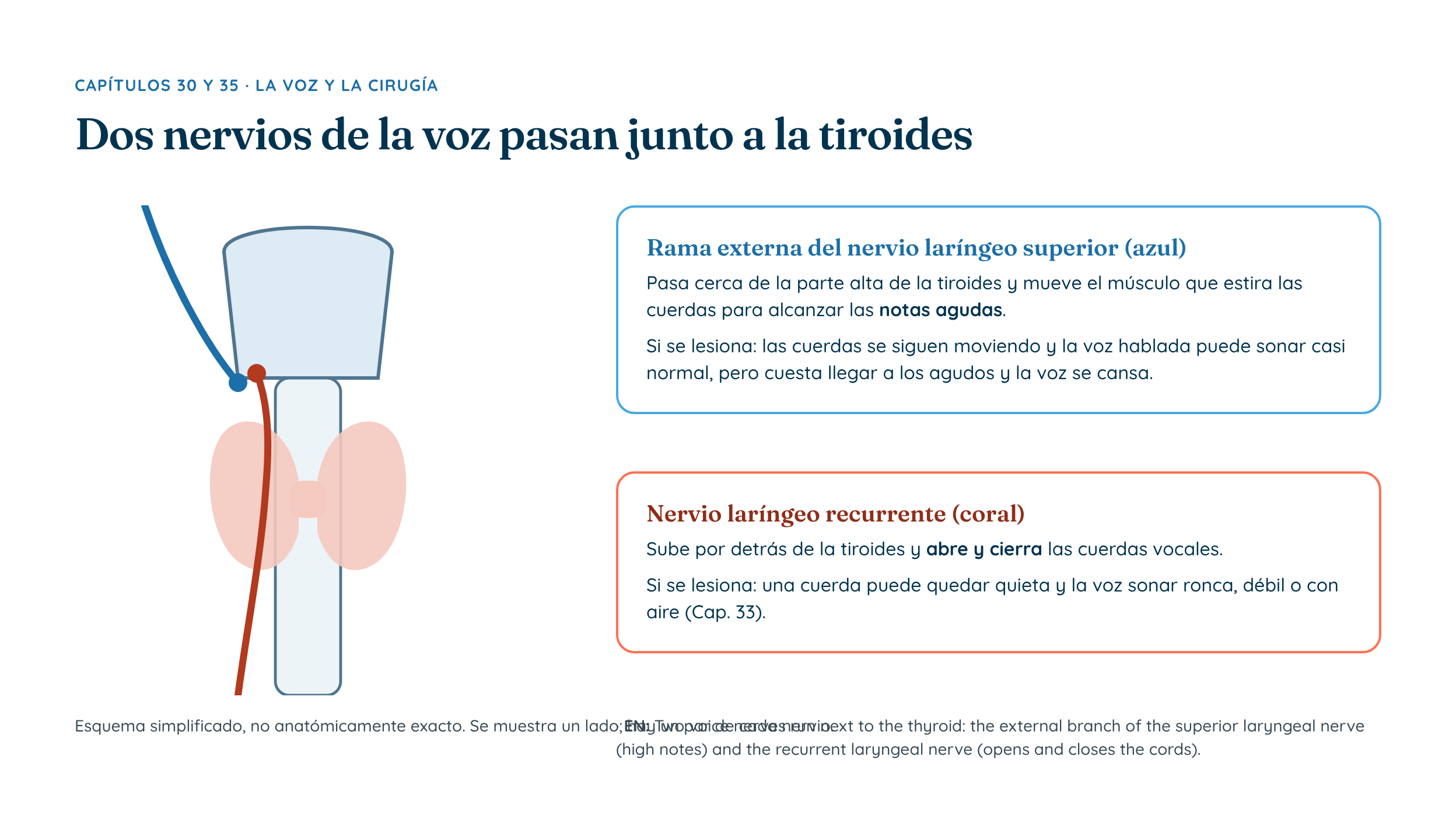
Your voice can sound normal even when a vocal cord is not moving well, and it can sound hoarse when the vocal cords are fine. The only way to know for sure is to look. A quick exam of the vocal cords, called laryngoscopy, is one of the most useful tests in thyroid care.
What the exam is like
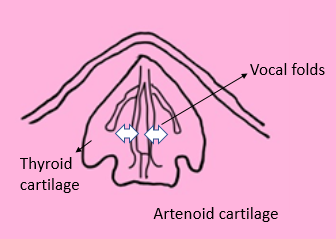
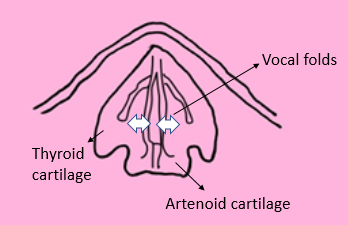
The exam takes a few minutes in the office. After a numbing spray in the nose, a thin, flexible camera is passed through the nose to look down at the voice box. You will be asked to breathe, say “eee” and sometimes sing a few notes so the doctor can watch both vocal cords open and close. This shows whether each cord moves. It is a little odd but rarely painful, and you can drive and eat afterward.
Some voice specialists also use stroboscopy, a special light that shows the vibration of the vocal cords in slow motion. Laryngoscopy shows movement; stroboscopy shows how the surface of the cords vibrates, so it can detect subtle problems that a regular exam can miss.


Before surgery: why look?
Guidelines recommend that everyone’s voice be checked and recorded before thyroid surgery [1]. An exam of the vocal cords before surgery adds a baseline. It shows whether both vocal cords already move normally, which helps your surgeon plan the operation and prepares the anesthesia team.
It matters because how your voice feels is not a reliable guide. In one study, almost 4 in 10 patients reported voice complaints before surgery, but only 1 in 10 of them had something abnormal on the exam [3]. The reverse also happens: a paralyzed vocal cord can go unnoticed. In a study of nearly 6,000 patients examined before thyroid surgery, about 7 in 1,000 already had a vocal cord that was not moving [2].
Does everyone need an exam before surgery?
This is a genuine debate among experts.
- National guidelines recommend an exam before surgery when your voice is already changed, you have had neck surgery before, or a cancer may be growing beyond the thyroid [1].
- A paralyzed cord before surgery is more likely with larger nodules, voice symptoms, prior neck surgery and older age [2]. Without these risk factors, it is rare, about 2 to 5 in 1,000 [4][5].
- Many surgeons, especially voice specialists, examine every patient anyway, because the exam is quick and the baseline is valuable if anything changes later. That is a local practice policy, broader than what the guidelines require; ask your surgeon what their practice does.
After surgery: when to look
Guidelines recommend checking your voice between two weeks and two months after surgery, and examining the vocal cords if your voice has changed [1]. After surgery, the most common finding when the voice is affected is one vocal cord that is not moving fully [6].
Ask for an exam if, two weeks after surgery, you still have:
- Hoarseness or a breathy, weak voice.
- A voice that tires quickly or has lost its high notes.
- Coughing or choking when drinking.
An early exam matters. If a vocal cord is not moving, early treatment can make speaking and swallowing easier while the nerve recovers (Chapter 33).
Key points
- How your voice sounds does not reliably show whether your vocal cords move; the exam does.
- Guidelines call for a voice check before surgery for everyone, and a vocal cord exam for people with risk factors.
- If your voice has changed two weeks after surgery, ask for a vocal cord exam.
A head and neck surgeon experienced in thyroid and voice care can help.
Sources
- Chandrasekhar SS, et al. Clinical practice guideline: improving voice outcomes after thyroid surgery. Otolaryngol Head Neck Surg. 2013;148(6 Suppl):S1-37. doi:10.1177/0194599813487301 PubMed PMID 23733893
- Maher DI, et al. Routine Preoperative Laryngoscopy for Thyroid Surgery Is Not Necessary Without Risk Factors. Thyroid. 2019;29(11):1646-1652. doi:10.1089/thy.2019.0145 PubMed PMID 31333068
- Lee CY, et al. Preoperative laryngoscopy in thyroid surgery: Do patients’ subjective voice complaints matter? Surgery. 2014;156(6):1477-1482. doi:10.1016/j.surg.2014.08.038 PubMed PMID 25456935
- Black KA, Wilkinson DS. Selective laryngoscopy before thyroidectomy: a risk assessment. ANZ J Surg. 2022;92(6):1423-1427. doi:10.1111/ans.17700 PubMed PMID 35403799
- Franch-Arcas G, et al. Is there a case for selective, rather than routine, preoperative laryngoscopy in thyroid surgery? Gland Surg. 2015;4(1):8-18. doi:10.3978/j.issn.2227-684X.2015.01.04 PubMed PMID 25713775
- Burckardt ES, et al. Endoscopic laryngeal findings in patients undergoing thyroid and parathyroid surgery. J Laryngol Otol. 2021;135(3):264-268. doi:10.1017/S0022215121000529 PubMed PMID 33632350
This guide is for general education only. It does not diagnose conditions or replace a medical evaluation. Talk with your own doctor about your situation. In an emergency, call 911 now (in Puerto Rico or the United States; elsewhere, your local emergency number).