How to choose your thyroid surgeon
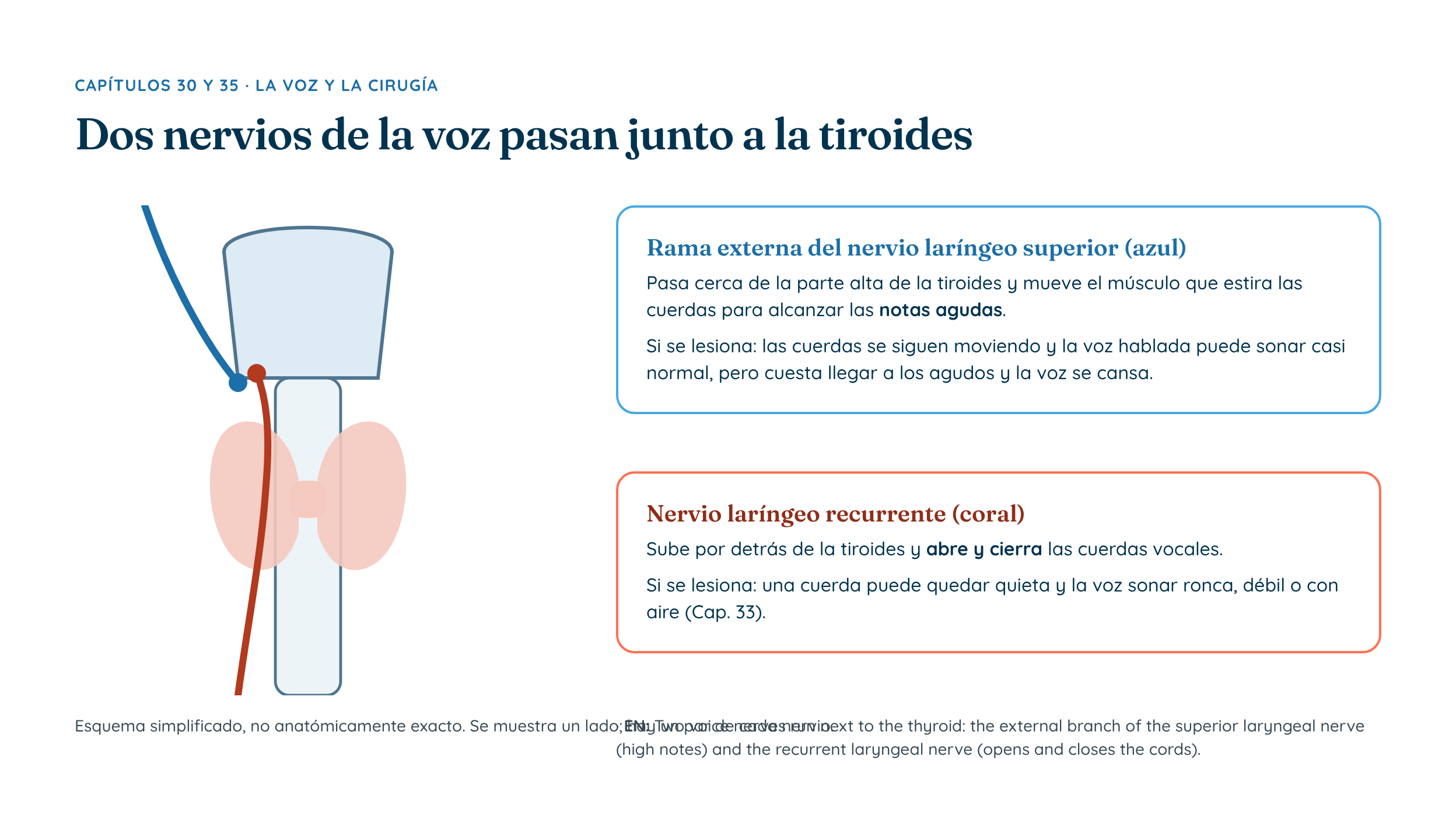
The single most important thing you control about your thyroid surgery is who does it. Thyroid surgery is safe in experienced hands, and the research is consistent: surgeons who operate on the thyroid often have fewer complications than surgeons who do it occasionally.
Why experience matters
In a national U.S. study of nearly 17,000 total thyroidectomies, the risk of complications kept falling as a surgeon’s yearly number of these operations rose, up to about 25 per year [1]. Yet most patients in that study, about 8 in 10, were operated on by surgeons who did 25 or fewer, and the typical surgeon did only 7 a year [1]. Another large study found that rates of lasting voice and calcium problems started to improve once a surgeon performed about 18 total thyroidectomies a year [2]. The same pattern holds among ear, nose and throat surgeons [3]. These studies show associations in total thyroidectomy, not a guarantee: no single number is a credential or a universal cutoff, and a surgeon’s experience, training and audited results all matter. Ask any surgeon how often they do your specific operation and how they track their outcomes.
These numbers are guides, not guarantees. Many good surgeons fall near these ranges, and in health systems that already have low complication rates the differences can be small [2]. But asking about experience is reasonable, and a good surgeon will welcome the question.
Who performs thyroid surgery?
Thyroid surgery is done by head and neck surgeons (otolaryngologists) and by endocrine or general surgeons. Both can be excellent. What matters more than the title is focused training, a regular thyroid practice, and good results.
What a careful thyroid surgeon does
National guidelines describe practices that protect your voice and calcium [4][5]. A careful surgeon will usually:
- Ask about and document your voice before surgery.
- Examine your vocal cords before surgery if your voice is already changed, if you had prior neck surgery, or if a cancer may be growing outside the thyroid.
- Identify and protect the voice nerves during the operation; many also use nerve monitoring.
- Work to find and preserve the parathyroid glands.
- Check your voice in the weeks after surgery and refer you for an exam if it has changed.
- Give you a clear plan for calcium and for who to call after hours.
Questions to ask any surgeon
- How many thyroid operations do you perform each year? How many total thyroidectomies?
- What are your rates of lasting voice problems and lasting low calcium?
- Will you examine my vocal cords before and after surgery?
- Do you use nerve monitoring?
- Who manages my calcium after surgery, and who answers after hours?
- If my vocal cords are affected, who treats that?
- Do you also offer non-surgical options, such as radiofrequency ablation, if I am a candidate?
A second opinion is normal
Asking for a second opinion before thyroid surgery is common and reasonable, especially for cancer, large goiters or repeat surgery. A confident surgeon will not be offended.
A head and neck surgeon experienced in thyroid and voice care can help.
Sources
- Adam MA, et al. Is There a Minimum Number of Thyroidectomies a Surgeon Should Perform to Optimize Patient Outcomes? Ann Surg. 2017;265(2):402-407. doi:10.1097/SLA.0000000000001688 PubMed PMID 28059969
- Meltzer C, et al. Association Between Annual Surgeon Total Thyroidectomy Volume and Transient and Permanent Complications. JAMA Otolaryngol Head Neck Surg. 2019;145(9):830-837. doi:10.1001/jamaoto.2019.1752 PubMed PMID 31343681
- Gorbea E, et al. The impact of surgeon volume on total thyroidectomy outcomes among otolaryngologists. Am J Otolaryngol. 2020;41(6):102726. doi:10.1016/j.amjoto.2020.102726 PubMed PMID 32979668
- Chandrasekhar SS, et al. Clinical practice guideline: improving voice outcomes after thyroid surgery. Otolaryngol Head Neck Surg. 2013;148(6 Suppl):S1-S37. doi:10.1177/0194599813487301 PubMed PMID 23733893
- Patel KN, et al. The American Association of Endocrine Surgeons Guidelines for the Definitive Surgical Management of Thyroid Disease in Adults. Ann Surg. 2020;271(3):e21-e93. doi:10.1097/SLA.0000000000003580 PubMed PMID 32079830
This guide is for general education only. It does not diagnose conditions or replace a medical evaluation. Talk with your own doctor about your situation. In an emergency, call 911 now (in Puerto Rico or the United States; elsewhere, your local emergency number).